
Designing ab initio postgraduate degrees
Mark Baimbridge, University of Bradford
Edited by Rebecca Taylor, The Open University
Published January 2013

The growth of postgraduate provision has been one of the most significant developments across UK Higher Education Institutions (HEIs) with a 14 per cent increase in postgraduate research (PGR) and a 46 per cent increase in postgraduate taught (PGT) degrees between 2002–03 and 2008–09, whilst over half of the latter are now being taken on a part-time basis. This significant increase in the number of postgraduate degrees offered, in particular taught Master’s, has been a financial lifeline for many universities constrained by funding council caps on undergraduate numbers and latterly fees, whilst offering further academic credibility to the department. Thus although the importance of instigating new PGT programmes can be seen from a variety of directions, the design of ab initio postgraduate degrees has consequently become more potentially problematic given an ever-crowded marketplace. This chapter therefore seeks to explore some of the challenges of introducing new PGT degrees.
1. Introduction
Section 2 argues that rather than solely basing their development on the inherent interests and expertise of staff within the department, it is vital to consider what subject areas are being sought by students. This might necessitate a shift in thinking to become receptive to market demand, together with embracing a level of flexibility as tastes change, to either adapt established PGT programmes or discontinue and replace them with new offerings. This then raises the issue of how to ascertain market conditions regarding the preferences of potential postgraduates, information concerning potential competition in the form of other similar degree programmes, together with input from external stakeholders.
Given that exhaustive market research is unlikely to be available to many departments/universities, it is suggested that utilising your own student cohort should provide sufficient diversity to approximate to potential PGT applicants. Hence, Section 3 examines the use of focus groups in offering an appropriate interaction between the department and its students to discuss ideas relating to the instigation of ab initio postgraduate degrees. These groups potentially provide students with the freedom to discuss ideas important to them, rather than to the department.
This is extended in Section 4, as although focus groups can be effective, it is usually appropriate to undertake additional forms of information gathering such as via a questionnaire, again directed at your own prospective postgraduate students. This could include considering the following factors: student background, their interest in undertaking and subject theme of a proposed PGT, attitudes and drivers as to where students wish to undertake a PGT programme, what information is important in their decision-making process, together with examining the level of fees that students would be willing to pay.
The following two sections then address the need to review the potential competition of existing, taught, postgraduate provision. Section 5 examines this from an internal perspective whereby it becomes essential to conduct a critical analysis of provision to determine whether the PGT programme still fulfils the original criteria and if these expectations are still relevant given likely future market conditions. From the point of view of prospective postgraduates, most institutions will be compared on a wide-range of criteria; the focus therefore should be upon identifying/developing a competitive advantage within the provision/course that differentiates the department within the marketplace.
Section 6 discusses the implications of an ever-shifting external postgraduate environment, whereby it is crucial to ensure that the provision provided remains competitive. Simultaneously, it is necessary both to identify and build upon an existing competitive advantage. Consequently, once an ab initio PGT programme has been successfully designed and established, departments should conduct a periodic strategic review relating to issues such as current provision in relation to programmes aims, present and likely future demand, together with the identification of competitor PGT programmes.
Following the market research phase, Sections 7 and 8 then discuss issues relating to curriculum development. Section 7 notes that the trend for postgraduate Master’s degree streams is to be increasingly specialist/subject specific with numerous circumstances that require valid consideration when developing an effective PGT programme. However, curriculum design need not become a complex process, especially if the programme is structured in a logical way. These ideas are extend in Section 8 to give additional possibilities by exploiting the strengths of such a framework. For example, there may be the opportunity to open up the degree programme, particularly through an international degree stream or to a wider audience through the provision of a pre-Master’s diploma.
2. Demand-led provision: discovering what students want
2.1 Resisting the temptation to ‘teach what we know’
Although as economists we spend a sizeable amount of our time considering markets of one form or another, the potential irony is that when it comes to the development of ab initio PGT the notion of being market receptive, if not actually market driven, is something that frequently escapes us. Whilst many would wish to refute the idea of pandering to the market, consumer sovereignty is nevertheless a powerful concept that now intrudes upon the UK higher education sector, albeit imposed by external actors. However, the argument here is that to create a successful PGT programme it is essential to consider demand-led provision in terms of broad subject area rather than sink into the often complacent situation of ‘teaching what we know’. The idea, however, is not to disregard the inherent academic expertise of the department since that would clearly be folly, rather it is a call to embrace such expertise in a positive direction through channelling it into the successful creation of a PGT programme.
As witnessed over the past decades, the finances of the UK higher education sector have changed irrevocably and the marketisation of the sector is rapidly gaining pace. Whatever the merits or otherwise of these developments, the introduction of new PGT degrees is encapsulated within this framework. Thus the number of programmes has dramatically risen as universities have sought to break the yoke of government and funding councils. Additionally, the mantra of ‘neo-classical endogenous growth’ as espoused by a former Chancellor of the Exchequer and Prime Minister has transmitted itself to increasing numbers of university students across the globe who seek knowledge and qualifications beyond undergraduate level and in what is still (thankfully) regarded as a high-quality higher education sector.
Therefore entry into this market has become potentially more problematic given the numerous PGT programmes that currently exist. Consequently, for an ab initio Master’s degree to succeed it must fulfil the following criteria: (i) be delivered by a reputable university, (ii) cover a highly pertinent and contemporary subject matter, and (iii) be attractive to a large segment of high-quality potential students.
2.2 Discovering ‘what students want to study’
Market research represents the foundation of any business decision and the academic environment is no exception. It is a structured process that, if done correctly, offers insight into the market, the product and the relationship that the consumer has with it, which, however distasteful, is how potential students are increasingly considered. The package that a postgraduate degree offers represents the ‘product’ which then needs a market; this in turn needs to be known, understood and exploited to provide the optimal outcome for the company (i.e. university/department).
Consequently, designing a postgraduate degree requires, as in any other product development process, gathering information about the potential customers (i.e. students), and other available similar degrees (i.e. competitor institutions and degree programmes), together with market conditions (e.g. employers’ demand). The phrase ‘knowledge is power’ supports the fact that relevant information has to be gathered, analysed and used in making decisions while also making use of the experience and intuition of those making the decisions. Conducting market research and looking into all aspects mentioned above will minimise the risk of an unsuccessful programme. By providing the right product (degree) the university/department possesses the potential to benefit greatly through positive externalities (e.g. reputation, student intake, research opportunities, grants, etc).
Hence, when undertaking the design of a postgraduate degree from first principles you need to devise a well-structured plan that will tell the department what information is needed and where and how it will be collected. However, economists are acutely aware through the notion of search costs that gathering information can be an expensive and time-consuming task at the best of times. This is not to say that there are no risks associated with good market research, but such risks are likely to diminish as the quality of the research increases. Another aspect to remember is that the findings of market research are there only to facilitate decision-making and should not be used as the sole rationale when making a judgement.
There are two broad types of market research and ideally both should be incorporated. Primary market research, in terms of gathering the information directly (e.g. conducting interviews, focus groups and questionnaires) will complement and supplement information retrieved from indirect sources of secondary market research (e.g. existing statistics, data and articles). Such secondary research can be used to identify the competition and to establish the type and level of students that the degree will attract, while primary research can be used to measure the current effectiveness of the university/department and which aspects of the student experience could be improved on.
Furthermore, understanding the requirements and expectations that employers have from a postgraduate can help when designing individual modules (e.g. in terms of delivery methods and assessments type), together with the entire structure of the course (e.g. time scale, placements and internships). Indeed, labour market evidence indicates a steady shift in the structure of the workforce, with a fast growth in higher skill employment (i.e. professional and managerial positions) illustrating employers’ demand for highly qualified professionals, whereby education and associated qualifications is a key indicator of skills.
To understand expectations and unveil the factors that will bring satisfaction to students during their degree is a first step in offering the appropriate type of environment, material, support and guidance. For example, the timeliness and quality of feedback and the availability and suitability of student support services were some of the aspects that received less positive views in the Postgraduate Research Experience Survey conducted by the Higher Education Academy (HEA). As such, conducting well-structured market research will offer the information and criteria on which students base their decisions when choosing to follow, or not, a particular PGT programme as well as how they differentiate between similar programmes/institutions.
One of the most straightforward and cost-efficient ways of conducting market research is to make use of the existing undergraduate cohort within the department. This can be done through a variety of formats: casual discussions, tutor meetings and informal gatherings. This type of communication can provide valuable information about a student’s requirement, expectations and limitations when thinking about a postgraduate degree option. Whilst another route to reaching potential students is liaising with international recruiters and agencies, researching into the culture and different expectations/demands that international students might have when applying for a postgraduate degree.
Hence, the methodological approach proposed for examining students’ interests regarding the introduction of PGT programmes is the combination of the two principal types of research in the social sciences and humanities, namely quantitative and qualitative research. Quantitative research is based on a hypothesis, deduced from theory tested by way of observation and data collection. The findings, following analysis, would either confirm or reject the theory. Furthermore, although quantitative research may be mainly used for testing theory, it can also be used for exploring an area and for generating hypotheses and theory. The typical methods include questionnaires, structured interviewing, structured observation and secondary data.
In contrast, qualitative research differs not only in the use of language and style, but also in the generation of ideas for discovering meanings and involves both interpretation and a critical approach to the social world. However, this can be used for testing hypotheses and theories, using various methods, for example, semi-structured interviewing, unstructured interviewing and focus groups. Hence, each approach possesses strengths and weaknesses, so over-reliance on any one method is not appropriate. Consequently, it has been suggested a superior approach is combining quantitative and qualitative research to examine the same phenomena from as many methodological perspectives as possible, which implies a triangulation approach.
After considering the types of triangulation, the research objectives, research questions and research methodology theories, the combined quantitative and qualitative multi-method approach can be used through the analysis of secondary data from a survey and primary data from focus groups. From the theoretical perspective, each method or technique has its own unique strengths and weaknesses, whilst the results the researcher obtains will be affected by the data collection method governed by an inevitable relationship between the method and result. Therefore, it is best to undertake research using a variety of data collection strategies to cancel out the ‘method effect’.
From the practical perspective, the two-stage process of empirical analysis of questionnaire data and focus groups is feasible and justifiable. First, the empirical analysis of secondary data allows the collection of a large amount of data from a sizeable population in a highly economical way that is also standardised, thereby allowing comparison. Secondly, the use of focus groups permits the obtaining of deeper insights. In particular, this combined approach also establishes the use of one type of data collection method to check the consistency of data collected from another method to ensure accuracy and reliability. Therefore, the outlined triangulation approach is argued to be highly beneficial and will result in a rich data set which will permit a greater understanding and lead to greater confidence being placed in the findings and conclusions of the research.
3. Utilising the student cohort as focus groups
A more structured and controlled environment can also be of use when assessing the needs and characteristics of a postgraduate degree programme. For example, focus groups can offer an appropriate interaction between the department and its students while allowing the group to discuss ideas and reach agreement on key aspects of the issue. This not only offers a better framework for future research, but also gives a more in-depth perception of the way students receive, analyse and express ideas about the subject, together with their flexibility and reaction to new and innovative methods of knowledge distribution.
However, like any other research method, focus groups require careful planning and are a labour-intensive process. Fortunately, a variety of specific and detailed ‘how to’ guides exist to assist researchers embarking on a focus group project; these address some of the more theoretical issues associated with the focus group methodology.
The advantages of using a focus group consist of the freedom that the group has to discuss ideas important to it, rather than to the department, and the unstructured or semi-structured nature of the discussions. As a technique that collects data through group interaction, focus groups in most cases do not constitute the only basis for a complete analysis. They need careful planning and organising to ensure that the highest quality results are obtained.
In terms of efficiency, focus groups are located between participation observation and individual interviewing and as such they present a balanced outcome. Their structured but not fully controlled environment offers a valuable source of insights into complex behaviour and motivations. However, time constraints have to be taken into account and if only from this point of view, they make an excellent choice for fast qualitative data collection. This is not to say that other methods are less functional; if anything, using focus groups with individual interviews for instance, can give more value and increase the quality of the data gathered. Preliminary, unstructured individual interviews before a focus group can therefore point the department in the right direction in terms of the way students might think and feel about a postgraduate degree. From there, the information can be used when conducting the focus groups, with key elements being woven into the discussion.
When considering the composition and structure of a focus group there are some key general elements to bear in mind. They should be small enough to manage, but large enough to allow a variety of ideas, opinions, attitudes, beliefs and preferences to be expressed, argued and developed. As well as their size it is important to consider the differences among potential contributors, such that the group’s dynamic depends upon the membership’s background, education and interest in the topic. Keeping this in mind, if using current undergraduates within the department, it is worth considering having students from different courses and from different cultural and social backgrounds to illustrate the potentially different levels of interest in a postgraduate degree. As most universities and departments stress the importance of diversity this should be easily achieved. Consideration should be given to any differences between students with arrangements to facilitate comfortable conversations without inhibiting students or causing off-topic arguments. Finally, ideas discussed during a focus group are likely to generate new ones, even days after the meeting. Thus, making sure participants feel comfortable about getting in touch and expressing these ideas is vital.
Even if a focus group provides a rich insight into the students’ behaviour and motivation, it has to be noted that as a research method it has both advantages and disadvantages. For example, it helps to determine needs, evaluate programmes and the effectiveness of a particular curriculum topic. However, generating new ideas and analysing them as a direct result of the group environment can also bring into the equation a substantial level of subjectivity. Focus groups are particularly sensitive to cultural variables so the composition and dynamic of each group should ensure that the participants have something to say about the topic and feel comfortable speaking to each other. For best results, it is suggested that focus groups should be used to elicit information that can guide future work, but not determine it.
Focus groups offer a wide picture of participants’ thinking in a relatively short time and can be used as a preparation tool for surveys; they provide data necessary to reduce invalidity within a survey through ensuring that the questions mean the same to both the questioner and questioned. Providing insights into question wording will define the quality of the data obtained from a survey. Thus it is important to consider how to express an idea in a way that resonates with students while minimising questions and confusion, using students’ vocabulary and taking notice of students’ priorities when considering a postgraduate degree etc. The focus group should be thought of as a social experience and it has to maintain an informal, conversational environment; using jargon could confuse, inhibit and discourage participants from expressing their ideas.
Another aspect to remember when using focus groups is that the results will be influenced by the number of students taking part in the exercise. This is usually small so generalising the findings can be a difficult task. Hence, a possible solution is to follow up focus groups with either quantitative research methods or to expand their use by incorporating technology in the research. Traditionally, focus groups take place face to face, but now online forums and groups can be used to transfer the function of a focus group to an online community. The advantages of such a media are, first, the disappearance of the time factor. Once a question/topic has been posted users can take their time in replying, which in return potentially offers a richer insight and a more detailed response to the topic. Secondly, this method makes it easier to reach users/students located all over the world, giving the research more authenticity and making generalisation easier. However, the use of online platforms means that it is not possible to analyse, and reflect, on body language during discussions.
One way to put into practice the focus group idea is to use students who have already demonstrated a commitment to the department, for example, through being members of the Student Staff Liaison Committee and/or members of other departmental societies and thereby illustrating an active involvement and interest in all aspects of academic life. The groups would then have a semi-structured style, with the moderators guiding the participants along the way. Indeed, there are several questioning strategies that allow moderators to subtly influence the group process: leading questions, factual questions, anonymous questions, obtuse questions, testing questions, feelings questions and summary questions. Beyond aiming to generate questions for each of these types, it is worth incorporating both factual and personal, objective and subjective types of questions.
4. Survey existing undergraduates
Although using focus groups can prove to be particularly effective, it is almost always appropriate to select and design survey questions as a supplementary method to solicit feedback from individuals in the field, in this case prospective postgraduate students. Thus, as part of the initial work in designing a postgraduate degree, it would be judicious to undertake various qualitative research methods to assess students’ perceptions and extract information that will ensure a smooth development of the work ahead.
Following the ideas generated through the use of a focus group and any additional ones that the staff wished to investigate, the next step would be to develop a pilot survey and then forward this to a selected group of third-year undergraduates, for example, those from the Student-Staff Liaison Committee, to obtain feedback and refine the questionnaire. In contrast to the open questions of the focus group, the survey would be primarily composed of closed questions of a categorical nature; either a straightforward yes/no or a Likert ranking scale. The option for the respondents to provide further comments can be given for the majority of questions. Both the idea of the pilot survey and the opportunity for respondents to add additional comments is on the basis that it would be presumptive to assume that all eventualities were covered.
A potential framework for a questionnaire into student interest and perception regarding the development of new PGT programmes is suggested below to encompass the following broad themes:
- student background: nationality, gender, current undergraduate degree programme
- interest in undertaking a PGT programme
- attitudes and drivers as to where students wish to undertake a PGT programme
- the subject theme of a proposed PGT programme
- access to information important in the decision-making process
- examining the level of fees that students would be willing to pay.
The danger with any questionnaire is to overload it with numerous questions and permutations of the same question. There is a trade-off between ensuring the thoughtful participation of respondents and the breadth of issues to be explored. Clearly, close reflection on the findings of the focus groups and any issues arising from the undertaking of a pilot survey should reduce the potential of such an imbalance occurring in the questionnaire, or at least limit its impact.
Questions concerning student background provide an insight into how interest in undertaking a PGT programme relates to potentially crucial individual characteristics amongst respondents (e.g. nationality and gender) and whether their current undergraduate degree influences attitudes/perceptions towards PGT programmes. These will permit disaggregation of the findings to allow a deeper examination of sub-markets, for example, whether there is a greater preponderance for overseas (i.e. non-home/EU) students to seek to pursue a PGT programme compared to home/EU students. Inclusion of such a variable will then permit a comparison across the whole questionnaire, which given the significance of attracting overseas students for the majority of UK HEIs could be a crucial factor in the eventual design of a new PGT programme.
A potential problem with the use of a blanket questionnaire for all final year undergraduates is that it is perfectly conceivable that a significant proportion either may not intend to undertake further studies, or have as yet to fully think through the implications. Clearly, it is possible to eliminate such potential difficulties through only selecting those students who have firmly decided to extend their learning by a PGT programme. Logistically this is likely to prove problematic in terms of distributing the questionnaire to such a select group. Also it is perfectly possible that the surveyed and the non-surveyed both include non-decided students.
Hence, questions to ascertain interest in undertaking a PGT programme, such as ‘Are you considering taking a Master’s degree? – yes/no’ and ‘Have you researched potential Master’s courses and their fees? – yes/no’ should be included. These permit questionnaire distribution to the entire final year cohort to maximise the number of returns in the simplest manner possible, and a disaggregated analysis of the results to filter them for differing attitudes towards either undertaking a PGT programme or to more subtly test the level of commitment. Additionally, the latter question allows a judgement to be made regarding respondents’ answers in terms of how realistic and well-informed they are in terms of the level of likelihood of undertaking a PGT programme.
Next, it is important to understand the attitudes and drivers that inform student choice when they are seeking to undertake a PGT programme. The first question under this theme might therefore be worded as ‘What factors are important to you when considering a Master’s degree?’ with a number of potential reasons provided, for example:
- reputation of university
- reputation of course
- degree title
- future career
- fees.
Evidently, not all permutations can hope to be encapsulated regarding individual student preferences, so a broader strategy has to be applied to elicit information on what are likely to be central concerns for PGT programme applicants. These could be examined through the standard Likert five-point scale, whilst the inclusion of ‘Other’ and space for respondents to add their own determinants provides a safety net if significant options have been omitted.
Seeking to assess students’ destination for a PGT programme is a potentially sensitive issue given that the survey is being conducted in-house. The final year students participating might feel under pressure to indicate their eagerness to remain within the department. Thus it is important to have initially reassured them that all responses are anonymous and that you are seeking unbiased opinions. However, the issue of choice for further study needs to be addressed through a question with wording such as ‘Would you like to stay within this department for your Master’s assuming we offered one in an area of interest to you? – yes/no’. Clearly, a primary reason for a department to be considering the introduction of new PGT programmes is to provide a natural follow-through for their undergraduates onto what is becoming an increasingly commonplace level of further learning. Moreover, it is likely that such an already captured market will provide the bedrock of recruitment to a domestic postgraduate course.
However, it is entirely possible that current undergraduates will, at the minimum, apply elsewhere. Therefore it is important to discover why this might occur with a direct follow-up question worded along the lines of: ‘If no, then what factors would make you want to choose another Master’s?’ with reasons including:
- wish to experience another department
- wish to experience another university
- wish to experience another city.
Again the option of including ‘Other’ is available so respondents can express additional reasons.
However part of the rationale for the introduction of an ab initio PGT programme is the retention of current students; hence it is important to switch back to a more positive approach with a question worded along the lines of ‘What factors would be important in your decision to stay within the Department for your Master’s?’ Potential reasons to be offered to respondents, on a Likert scale, would, for example, include:
- subject focus of Master’s degree
- atmosphere of department
- familiarity of teaching/assessment
- convenience of staying in the city.
The idea again would to be develop questions that cover a range of permutations, in this case, both tangible (e.g. the subject focus of a postgraduate degree), and intangible concepts that could be equally crucial within the mix of factors related to a student’s decision-making process through reinforcing positive perceptions and familiarity of their current experience.
As previously indicated, a key overarching theme when considering the development of new postgraduate courses is for the department to remain flexible and responsive to market demands and not solely focus on the supply aspects of underlying expertise and interests of staff within the department. Hence, the questionnaire should reflect such a proposition through offering a wide selection of potential themes for the new PGT programme(s). For example, at the basic level this could constitute both a mix of general subject disciplines:
- business
- management
- finance
- economics
- international
- development,
and broader concepts:
- global
- trade
- applied
- policy.
The temptation at this point is to overload the questionnaire with either too many potential subject disciplines or for them to be too specific. Whilst the former might appear beneficial in narrowing down student preferences, it is likely to result in a proliferation of responses from which it will be difficult to see the ‘wood from the trees’. Therefore based on initial findings from the focus group, and whilst paying some adherence to the inherent interests and expertise within the department, the use of generalised subject disciplines are likely to yield sufficient indication of preferences.
The additional use of broad concepts potentially fulfils two functions. First, to see if such keywords are something that would draw applicants to a PGT programme through their inclusion in its title. Secondly, in relation to highlighting specifically whether the underlying nature or approach indicated by the concept is one that is valued for a postgraduate degree.
The next key issue to investigate is how potential applicants to a PGT programme gather information important in their decision-making process. There is little point in proceeding through a careful process of designing your ab initio postgraduate course if, in its marketing, what students see as vital is omitted. Hence it would be helpful to include a question that asks ‘What kind of information is important to you (e.g. on a website and/or booklet) when considering a Master’s degree?’. Potential options could include:
- detailed description of core modules
- detailed description of optional modules
- future career prospects/pathways
- student profiles
- part-time option for the degree.
As illustrated above, such questions encompass a number of themes relating to aspects regarded as key to the decision-making process/the differentiation between competing PGT programmes, for example, concerning the syllabus. Additionally, it is often important to enable potential students to visualise what undertaking this pathway of further study would result in, thereby bringing an abstract and as yet untried concept to life and enabling them to more closely relate to that new experience. Finally, given the current financial climate both HEIs and potential students are frequently now having to consider more imaginative ways to undertake further study. Moreover, if there were to be a significant demand for some form of part-time provision then this could impact upon the programme’s overall delivery.
A further part of the questionnaire could focus on a topic that a cynic would suggest is close to economists’ hearts – that of money, and in this case the issue of tuition fees. Thus include a question addressing this, perhaps in terms of ‘For a Master’s within the department what level of fees would you be willing to pay? (Answer depending whether you are a home or overseas student; current Master’s fees are: home = £x,xxx; overseas = £xx,xxx)’.
As discussed above in relation to delivery provision, the financial equation regarding higher education has recently become more complicated by external factors (e.g. continuing effects of the 2008 credit crunch induced recession) and internal factors (e.g. the introduction of significantly higher undergraduate tuition fees). Thus the fee level for PGT programmes has become clouded as potential applicants will be carrying a heavier debt burden from their previous studies, whilst the undergraduate-postgraduate fee gap has not only now significantly closed for many, but will actually be reversed in most instances, especially for home/EU students. Additionally, from the point of view of the university/department it would be of interest to know the elasticity of demand for its new PGT programme to ensure the pricing strategy is optimised.
5. Reviewing competition of existing taught postgraduate provision: internal considerations
When conducting a strategic review it is necessary to conduct a critical analysis of the current provision to determine whether the PGT programme still fulfils the original criteria and if these expectations are still relevant given current and likely future market conditions. In some cases programmes may only require a small adaptation while in others, wholesale change may be required.
Most institutions will be compared on a wide range of multiple criteria by prospective students when reaching their decision about where they should study for their postgraduate education. Although price will be a key component, this is usually dictated centrally by the institution, as is the department’s reputation for all but the most research-intensive departments. Moreover, the option of being the lowest cost provider (as there is more scope for differentiating the charging structure) is unlikely to be an available option since the school and/or institution usually sets fees, and a lower fee can be seen as a signal for a lower quality course.
The focus therefore should be upon identifying/developing a competitive advantage within the provision/course that differentiates the department from the rest of the marketplace, thereby generating criteria that students will value and, when choosing between multiple institutions, will choose the department because of the perceived advantage that is offered.
The most successful method for differentiating yourself from another institution is to provide a superior quality product, which is usually signalled by a higher departmental reputation. Such signals would include:
- the entry requirements needed to be able to secure a place on the programme
- responding faster to student needs, through providing a new stream where necessary
- responding to the feedback received through various evaluation methods
- relationship building: this is key, whether directly with students or with institutional partners, such as sponsors, the local community or local businesses.
Hence, an effective strategy for attracting students to the programme covers the following key points:
- clearly defining target students and addressing their needs
- having a full knowledge of competitor institutions in order to facilitate the creation of a competitive advantage
- the strategy must incur acceptable risk
- the overall strategy should be resource and managerially supported
- the core strategy to attract students should be derived from the product and marketing objectives
- the strategy should be internally consistent with the elements blending to form a fully coherent whole.
Thus when comparing taught postgraduate provision there are a number of factors which need consideration. Students’ decisions will usually be based on their perceived quality of the course. With more information about each course being published online, institutions should expect students to compare directly and quickly key quality measures across multiple departments to inform their decision. Therefore, when seeking to attract the identified student market, thought needs to be given to the quality factors, such as the entry requirements students are expected to hold before the course begins – the temptation is to lower entry requirements to encourage more students to apply, but this acts as a market signal for a lower quality course, and students are more likely to have a deficit in their knowledge, resulting in lower achievement. Therefore, the correct balance to strike is crucial, with directions for what entry requirements to set informed by reference to the competitor departments’ requirements.
As postgraduate degrees are more specialist in nature and with the view to obtaining employment within relevant sectors, students are more likely to be engaged with their postgraduate degree choice through critically assessing the course content to determine whether this meets their long-term objectives for securing a job within their chosen market. Postgraduate degrees, therefore, have to provide both the general postgraduate level grounding in economic concepts, and attractiveness so students will choose this particular stream and department over all those offered within the higher education marketplace.
A central decision within the strategy regarding which programmes and streams to offer is the choice of the target market(s). There needs to be a decision made regarding which segment(s) of the market is attractive to the department, considering the capabilities/specialities of faculty members. Establishing streams for which the department is ill-equipped could potentially cause serious reputational damage. Creating a stream that is just a bland MSc in Economics will mean the degree will compete with the rest of the market, with far more established players and will do little to demonstrate competitive advantage to potential students. The choice of the target market will emerge during the analysis of the current market of higher education courses, the SWOT analysis and the conclusions that steered the department’s strategic direction. At this point, a broad view will probably emerge, with a number of segments that are your potential market, of varying attractiveness. A decision then needs to be made in order to narrow these down.
Currently offered streams should match current target markets. If the higher education market has changed, then thought needs to be given to whether to retain a stream, reposition the stream and its syllabus to target different market segments or, in the extreme case, divest and stop offering this stream in order to free up resources for other streams that are continuing to grow.
Alongside these decisions, thought needs to be given to which competitors are to be targeted. You need to be realistic about who competitors are: for example, where a top competitor comparison will be of interest is if a similar course is not offered by such competitors, either near your location or within the same institutional standing, as this could be an underserved market which you could tap into. Similarly, if a perceived lower-ranked institution offers a course that is not served within your institutional standings boundary, then there is the opportunity to corner this market and attract students who go to a lower-ranking university in order to study this subject. These courses then may be viewed as weak competitors and relatively easy to entice students away from.
The focus in programme development should be placed upon creating a competitive advantage; this will be the ‘signature’ of your programme that links your identified target market and the competitor target markets you wish to secure. This is the achievement of a superior quality through differentiation of the streams offered; whether that is student experience, uniqueness of stream or access to highly respected academics in their fields. In order for a major success over other institutions, a clear performance differentiation on the factors that are important to students is needed.
6. Reviewing competition of existing taught postgraduate provision: external considerations
The higher education taught postgraduate environment is constantly evolving. This could be due to the courses that are currently in vogue, the on-going repositioning of taught postgraduate programmes away from the traditional general tuition and more towards specialist streams, or to wider external factors beyond our control. The recent government postgraduate review ‘One Step Beyond: Making the most of postgraduate education’ concluded that while postgraduate education is a significant asset to the UK’s economy and has consolidated its reputation as ‘world leading’ in many areas, there is a growing need to ensure that postgraduate provision remains internationally competitive.
Moreover, the postgraduate marketplace is only going to become more competitive as domestic institutional departments seek to diversify their programme portfolio to mitigate any negative impacts from the Browne Review’s recommendations within the undergraduate market, while the international sphere bolsters its competitive edge within Europe (due to the Bologna accords) and Asian nations as more programmes become internationally recognised and taught in English. Further, these programmes generally have lower fees (and in some cases no fees at all), opportunities for scholarship and the experience of being taught within a different culture, all of which are extremely attractive to students balancing their decision between a perceived ‘middling’ department and the opportunity of studying within a new country.
Although there are numerous uncertainties surrounding the long-term structure of higher education in general, there will always be demand for high-quality economics graduates taught on high-quality programmes. Given the increasing debts students are expected to shoulder for their education, it is only natural to expect students to become increasingly actively involved with all aspects of their course rather than passively settle for the provision that is being offered. Therefore, in order to retain student numbers, only those departments which respond rapidly to changing student demand with a degree of flexibility in their courses will retain students in this more consumer-orientated environment. The classic system of individual postgraduate programmes or even, in some cases, whole departments being cross-subsidised on former academic prestige when they are no longer financially viable, is unlikely to continue, considering the increasing budgetary pressures many institutions now face.
Hence, as the postgraduate environment shifts so too must the postgraduate provision provided to meet the demands of prospective students to ensure departments remain competitive. With the abundance of postgraduate programmes available, it is crucial to identify and build upon a competitive advantage that a department offers and that students highly desire, so that they choose the department over available alternatives. Thus, simply offering degree streams that directly copy other institutions is unlikely to satisfy this new student-informed market, especially if there is a lack of necessary human and technical resource allocated to the programme’s provision, and ultimately only serves to undermine both student numbers and the department’s reputation in the long-run.
Therefore, it is critically important that a periodic strategic review is conducted, for example relating to:
- your current provision and whether it meets the current programme’s aims
- the current and likely future demand
- your identified postgraduate competitor institutions.
The first of these essentially represents internal considerations and is discussed in this section, whilst the second and third highlight the need for awareness regarding external factors and are discussed in the next section. However, each of the three parts of this review will need to run concurrently, in order for feedback to inform each section and its resultant strategy.
Rather than purely focusing upon postgraduate provision, it is advisable that the strategic review covers the entire department’s provision, including undergraduate degrees, since most departments have human and technical resources shared across multiple programmes. An isolated review would fail to acknowledge these synergies in addition to ignoring potential crossover factors, such as designing postgraduate programmes to complement the undergraduate provision and thus bolster the conversion rate of undergraduate students progressing onto postgraduate study within the same department.
When conducting a comprehensive examination of the current provision and where this fits into the marketplace, we need to distinguish between those sources which are external (i.e. those factors which are uncontrollable by the institution but yet still influence students’ decisions on whether they study at a postgraduate level and which institution they choose) and factors which are internal (i.e. that we possess some control over).
In order to identify the external macro environmental characteristics that will affect the provision there are numerous approaches that can be utilised with a Political, Economic, Social and Technological (PEST) analysis being a typical technique. Political factors include current and potential future government policies and those legal and informal rules under which institutions operate. Economic factors will affect individuals’ decisions on whether they choose to progress within higher education and will also have a material impact upon the department’s financial viability and the university’s cost of capital especially if borrowing has been entered into in order to modernise the campus to fulfil student expectations. Social factors include the demographic and cultural aspects, thereby referring to students’ needs and the potential size of the higher education market. Technological factors can lower the barriers to entry, reduce cost levels of provision and offer new techniques in teaching. An example of this analysis is given in Figure 1.
Figure 1: Political, Economic, Social and Technological (PEST) analysis for a UK HEI
| Factor | Impact on department | Planned initiatives |
|---|---|---|
| Political | ||
| Government caps growth in home undergraduate student numbers as student support costs become prohibitive |
|
|
| Increased higher education competition internationally ( e.g. Bologna reforms) and increased recognition of international institution degrees; new private providers of higher education established in UK and abroad |
|
|
| Government policy shift towards intervention within the higher education market |
|
|
| Economic | ||
| Continued economic downturn and slower recovery than previously expected |
|
|
| Slower growth requiring less economics graduates and increased unemployment for those newly qualified economics graduates |
|
|
| Social | ||
| Demand for higher education programmes shifts due to introduction of increased fee levels |
|
|
| Perceived cost of higher education too costly and not worthwhile |
|
|
| Technological | ||
| Increased use of internet-based resources |
|
|
These macro environment variables are just some of the factors over which we have no direct control. Thus, to develop these and to identify internal factors we need to develop our perspective in terms of a Strengths, Weaknesses, Opportunities and Threats (SWOT) analysis. As the process aims to identify only those strengths and weaknesses that prospective students identify with (i.e. it is consumer orientated), we should only include those resources or capabilities that the department has at its disposal which students recognise within this analysis. Whereas any variable which is outside the department’s control, which will affect student intake, should be noted in the opportunities and threats sections. These points under each section can be identified from focus groups (or other feedback systems at your disposal) conducted with students, employer feedback, faculty members (both internal and external) and information from publicly available domains of competitor institutions. An example of this analysis is given in Figure 2.
Figure 2: Strength, Weaknesses, Opportunities and Threats (SWOT) analysis for a UK HEI
Strengths
| Weaknesses
|
Opportunities:
| Threats:
|
By identifying the internal weaknesses and external threats, attention can be focused upon conversion strategies; how weaknesses can be transformed into strengths and threats into opportunities. Also, attention should be given to exploiting the current strengths and how new opportunities can arise. For instance, strong relationships with a local employer could lead to internships being offered or opportunities for student scholarships. A more structured relationship, with partnerships formed and employer engagement within the curriculum design, could become a new and exciting prospect.
Consequently, the results from the higher education environment PEST audit and SWOT analysis should lead to a revision of the on-going objectives of the department. These objectives should be at two levels: the first covering the overall departmental strategic direction, covering aspects across programme levels, and the second focusing upon particular streams which are offered.
7. Issues of curriculum development
Universities now offer a plethora of undergraduate degrees to both enhance their profile and to draw a larger number of students each year. This thinking has seeped into taught postgraduate master’s degree programmes too, with more specialist subject specific degree streams being launched. However, curriculum design need not become an increasingly complex process, especially if the programme is structured in a logical way. However there are numerous circumstances that require valid consideration when developing an effective taught postgraduate programme which this section seeks to consider.
- 7.1 Curriculum development process
- 7.2 Economies of scale: combining an academically coherent yet flexible framework
7.1 Curriculum development process
Postgraduate programmes are much more responsive to prevailing market conditions than their undergraduate siblings, since there are no HEFCE funded places and students are more proactive and informed when choosing their postgraduate institution from their prior experiences of studying within the higher education environment. With fees likely to rise in future years, it is vitally important that when developing the academic programme that students’ expectations are placed at the very centre. Whereas undergraduate degrees are fairly prescriptive in their requirements of key skills and programme learning outcomes for economics degrees, postgraduate programmes offer a wider field for flexibility and thus are more specialist in nature. This flexibility should be used to tailor the master’s degree programme to suit the current student market demands in order to attract a viable number of students for the postgraduate programme. All too often, academics want to teach a subject specialism, believing we know what students should be taught. However, with greater transparency and understanding of master’s degree programmes, and students’ treating their education as an investment, ignoring students’ desires will only lead to falling student numbers.
When devising the curriculum it is no longer a case of deciding which modules should be provided in delivering each specific degree stream. Rather, you also need to consider the holistic situation in relation to how students are supported in their learning, from the traditional taught content provision, to thinking about the most appropriate teaching strategies to employ for each specific topic to promote enhanced learning. Finally, developing and facilitating engagement activities to encourage student engagement in their subject and to ultimately equip them with the skills needed for their careers post studies need to be considered. Thus developing the educational programme is now about the ‘whole package’ when designing a course that will be attractive to students.
When developing a new degree stream, it is logical to begin with the aims and objectives of the course. To tease out these details it is pertinent to write a programme specification, outlining the knowledge, skills, understanding and further attributes a student is expected to have acquired upon completion of their studies. The academic side provides details on the proposed teaching, module provision, learning methods, assessment and how the programme relates to the QAA’s qualifications framework. This document needs to establish the necessary links between these attributes and, importantly, institutional objectives, through providing the rationale for the entire course, systematically demonstrating that there is a gap in the current market, for both students and employers, and that the programme fits within the strategic direction of the department’s faculty and the overall objectives of the institution. There needs to be a clear distinct statement about how the proposed course differentiates from other universities’ offerings, whether it will have a significant material effect upon courses which are already provided and the likely numbers of students that it is expected to attract.
Since universities are facing significant funding cuts, there has been an added emphasis on examining departments’ financial health and evaluating programmes independently for their commercial viability. Hence in these increasingly business-orientated times each programme or additional degree stream must conclusively demonstrate its commercial potential and the number of students which must be attracted to reach ‘break even’. This business case is typically handled by the faculty’s/school’s finance director to give some independence from the academic members who hold vested interests in ensuring the programme is approved. When this hurdle is overcome it is still important to reduce the risk of financial liabilities should the programme fail to attract enough students to make the course viable, so it is important to include an opportunity to cancel the programme if this situation arises.
The programme specification acts to focus minds by bringing together all the various elements in one document which will face various levels of scrutiny internally and will need to pass through the peer justification process within the institution to establish the programme formally. The content usually included in this document covers the following points:
- academic aims of the programme
- programme structure
- learning outcomes, transferable and key skills
- teaching strategies
- evaluation and quality assurance
- admission requisites.
Traditionally, there are a number of ways you can set out the programme specification. The top-down approach involves setting the high-level aims and objectives, identifying the gap within the marketplace, establishing the modules needed, devising the material and which faculty members specialities are required, the appropriate learning strategies and further activities which could enhance students’ consolidation of the material. Alternatively, the opposite approach can be employed, or sometimes a mixture is pursued. However, when establishing the programme, the advantage of the top-down approach is that thoughtful planning can lead to a maximisation of the potential economies of scale which exist within the academic environment.
Figure 3 The dynamic state of curriculum development
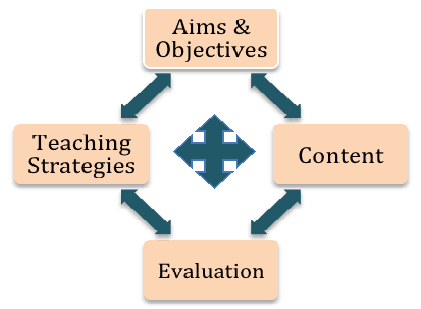
Furthermore, bringing all these elements together for the programme specification should not be a one-off static process. The process of curriculum development needs to be responsive to students’ current market demands, and through including current students’ evaluation of their learning experiences within this model as well as market demand change dictated through the aims and objectives. Thus this process should be on-going to ensure the programme is constantly relevant, leading to changes within stated objectives and/or content and teaching strategies employed, as depicted in Figure 3.
7.2 Economies of scale: combining an academically coherent yet flexible framework
In the provision of a Master’s degree programme there are inherent economies of scale; from the captive undergraduate student cohort for marketing your postgraduate degrees, to shared administrative costs across all department programmes. However, most important of these for us to consider are specialist faculty members whose research interests combine with postgraduate modules offered, and from the provision of combining degree streams to form a common programme of core economics modules which will form the basis of students’ advanced knowledge of economic concepts to yield a rounded master’s level programme. As previously noted, when developing a new degree stream, you need to focus your efforts on providing specific degree streams which match students’ interests. The generic MSc in Economics is offered at numerous institutions and gives little opportunity to differentiate a department from the competition of established institutions who already offer this degree stream. Hence, as an alternative the proposed degree stream could focus on the market demand and play to the department’s and academics’ strengths as these are more important in attracting students to the course.
Curriculum design clearly plays a crucial role in developing an academically coherent yet flexible PGT degree framework to equip students with an advanced level of understanding. One option frequently favoured is to divide the course structure between the autumn and spring semesters; the former allows the provision of underpinning theoretical concepts, with the degree specific, applied/practical modules following on during the spring semester. With these skills, students are then prepared to undertake their substantial independent research (dissertation) component during the summer semester to showcase their full skills and develop their research techniques. Due to the nature of this underpinning theory, which has to be broad and thorough in training economics students for their careers after their degree, there are numerous synergies between any degree streams. Therefore, academically, these initial modules would be broadly similar and could be more coherently and rigorously provided in one core module for each key economics subject, namely Macroeconomics, Microeconomics and Econometrics. This helps ensure that students are exposed to the full range of advanced levels of theoretical knowledge of what would be expected from an Economics Masters student without important subjects being excluded, as they do not fit in with the applied aspects of the degree stream they are pursuing.
Typically, a PGT degree programme requires the completion of 180 credits. Each semester thus requires 60 credits to be taken, with each module usually consisting of either 15 credits or 20 credits, equivalent to three or four modules respectively; although of course exactly how many postgraduate credits each module constitutes is usually defined by the school within which you are based. Given that the three core modules would best be provided during the autumn semester, this would account for the entire allocation if each module is 20 credits, or leaves one extra module if a less extensive 15-credits model was adopted (e.g. Research Methods).
In contrast, the spring semester is devoted entirely to the provision of specialist taught modules and sees the cohort split into their degree streams, with the provision of optional/elective modules where they can be accommodated. By following this structure, degree streams can make best use of faculty members, with those members who have their research interests aligned with specific streams providing the specialist spring semester modules, and where possible, members whose interests lie away from these areas providing either the advanced core courses, or substituting for those faculty members in undergraduate tuition.
The hidden strength of this block structure lies in the flexible adjustment process to respond to the dynamic state of the postgraduate market. Through offering a common core autumn semester and with two subject specific applied modules in the spring semester, an additional degree stream can be offered with only the need to provide a minimum of two new course-specific modules during the spring semester. Moreover, this also works in reverse if a stream is withdrawn, for example, due to below prescribed student quota numbers to make the course viable or staff unavailability, so that only two modules then need to be dropped. In this process, students could be notified and moved to another stream if they consent, and still follow a broad economics degree albeit with a different specialism. Furthermore, optional modules can be open to the whole cohort, as all would have the necessary pre-requisites to follow these modules, thereby saving on the number of options which would need to be provided through scale economies.
This system acknowledges the dynamic state of the curriculum design, as academic coherence of students engaged on the programme and accompanying feedback would ensure that a high-quality rigorous autumn semester in core advanced economic principles was provided, together with the flexibility to allow the expansion or contraction of taught postgraduate degree streams effortlessly. The constant evaluation feeding through to the content and teaching strategies employed ensures the programme remains strong but flexible, all without changing the fundamentals of the curriculum structure whilst efficiently utilising faculty members.
Lastly, serious consideration needs to be given to the entry requirements. As noted, any student who has a straight economics undergraduate degree, or a joint degree with at least 50 per cent of their components in economics courses, together with meeting the overall entry requirements of a second-class degree, would face little problem. However, consideration needs to be given to obtaining the transcripts of students with joint degrees, since they could possess weak skills in economics but hide these problems by boosting their degree average in their other degree component. Hence, it might be in the students’ best interests to follow the pre-Master’s programme if they are likely to perform poorly in the PGT programme. Secondly, there are issues as to whether it is permissible to allow students with minimum economics training to follow a specific programme, especially those who have a business background but limited knowledge of economics. These students would need to attend the pre-sessional course in order to acquire the full range of skills needed; whether they have the skills necessary to succeed would be a judgement call falling to an experienced academic admissions tutor.
Alternatively, institutions could avoid this through requiring a prescribed set of economics training prior to arrival, whilst requiring applicants not meeting this, yet possessing most of the necessary skills, to polish them through the pre-sessional. This particularly applies to those returning to education after being employed in an economics-related position, but do not necessarily have traditional qualifications.
The challenge is to widen the entry requirement scope to allow those students who have the ability to succeed without admitting those students who would perform poorly and for their own individual welfare would be better off pursuing the pre-Master’s programme. Often this is a difficult judgement call requiring a case-by-case review of the candidate.
8. Further issues in degree programme provision
There are a number of additional possibilities in further exploiting the strengths of this framework. For example, you could to open up the degree programme, particularly through an international degree stream, to facilitate the autumn semester spent in the home department, with the spring semester spent aboard at a leading specialist department for the degree undertaken. To prospective students, this potentially increases the attractiveness of the programme, particularly if they are from outside Europe. However, it raises logistical and uncertainty issues surrounding visas, requiring students to apply for a further visa if they wished to study elsewhere in Europe.
Additional logistical issues are involved in establishing partnerships and evaluating the modules that they would provide. As the host institution abroad is likely to receive only a limited number of students, it would be unlikely to possess the scope to provide tailored courses which meet the exact specification offered within the home institution. Thus careful consideration is needed to ensure that partner institutions can offer the control over which modules are available to ensure students meet the key requirements for their degree as mandated under the set benchmarks with which the degree stream is evaluated. Therefore, a period of searching, evaluation and negotiation is likely to be required until suitable partners are identified which would allow the semester abroad modules to be counted towards the overall degree classification. Further, there are issues over the pre-requisites required by the host institution, again as they are unlikely to follow precisely the same structure as the home institution’s autumn semester.
Furthermore, it is also important in this process to remember the individual student’s welfare. Students must understand that this is an exciting opportunity to study in a different institution and if they fail to make satisfactory progress with their studies while away, they will lack the necessary skills to undertake successfully the independent research project (dissertation) and consequently find it difficult to pass their postgraduate degree. Moreover, while there is an exciting opportunity in the collaboration of the provision of a postgraduate degree, there needs to be strong relations with the partner institution to ensure students’ academic and personal welfare.
Occasionally, students who lack the necessary skills from their first degree are not able to obtain a place on an economics master’s degree programme. These students would then either look to undertake an undergraduate degree in economics or, more likely, apply to another broader subject in the field of business or management. They are frequently lost even though they possess an interest in studying economics. However, this presents an opportunity to open the postgraduate degree to a new audience through the provision of an alternative pathway – the pre-Master’s diploma. Typically these programmes require students who do not possess the necessary skills in economics, but who have a second-class honours degree in an alternative field, to take the core immediate levels of economics in Macroeconomics, Microeconomics, Statistics and Econometrics. This enables them to acquire the necessary knowledge and skills for quantitative methods, economics, business and financial analysis that would be required to apply for many PGT-level degree programmes in economics.
Due to the core components forming the basis of immediate and some advanced levels of knowledge offered by undergraduate programmes, there are strong synergies between the two, even to the extent of allowing these students to attend some of the same lectures as undergraduate students, although more support would be needed through the use of more timetabled seminars/tutorials than the average undergraduate student might be expected to attend. Alternatively, they can be taught through the dedicated provision of modules designed especially for these students’ needs, although much of the material will be the same as for undergraduates, again generating economies of scale from significant savings in the need to develop teaching materials and associated knowledge of faculty members. Moreover, such pre-Master’s programmes have the added benefit of potentially attracting a significant number of overseas students who already hold some form of economics training from universities courses offered in their home country.
Furthermore, the provision of the pre-Master’s diploma opens up the natural next step of offering a two-years Master’s programme, where the first year is spent pursuing the pre-Master’s programme with the second year following the Master’s programme. Consequently, there is minimum effort involved in setting up this arrangement and it will provide students for both programmes. This pathway could be particularly important if you wish to attract foreign non-EU nationals to your pre-Master’s programme since they can apply for a two-year visa and would not necessarily wish to have to change institution once they have settled into their environment – as demonstrated through the student focus groups/survey previously discussed.
Following on from this, it may be wise to offer pre-sessional activities for a variety of reasons to boost students’ confidence in their skills prior to them starting. First, foreign nationals may have the qualifications and English language requirements with their undergraduate degree and IELTS through English as a foreign language course, but lack the skills required to be taught in a native English speaking department. Secondly, varying levels of academic writing skills exist even amongst the best students, so for some, this pre-sessional course will allow them to tackle the Master’s programme in the knowledge that they have had the chance to practise and hone these skills. Thirdly, a typical requirement for economics Master’s students is a background in econometrics; but not all economics degree programmes, especially joint programmes, offered within business schools teach these essential econometrics models. However, their knowledge of the rest of the economics pre-requisites to follow an economics PGT may be there bar this vital introduction to econometrics; hence, an intensive session prior to the autumn semester will be necessary for these students. Similarly in relation to mathematical ability, since they will be severely hindered in other modules if they lack these skills. Finally, there are some students who either lack confidence in their ability or have not studied economics for a few years, but have the background and would benefit from a pre-sessional refresher to sharpen their skills.
Consequently, given the above potential scenarios, there could be a number of pre-sessional courses available to students depending on the students’ needs which would substantially improve both the student experience and the department’s reputation. This is in contrast to the norm in many institutions which is to produce a fairly broad reading list and then expect their incoming students to be up-to-date on the material without offering them any form of assistance. Hence, it should be emphasised to potential PGT students that the principal aim through offering these sessions is to provide them with the best chance of succeeding in their PGT programme without being held back due to a lack in some prior knowledge which could be tackled in a fairly short period of time rather than have them playing catch-up for the entire period of their studies and thus experiencing a negative effect on their performance. Moreover, these courses need not be taught by in-house academic staff, but could make use of the PhD cohort who wish to pursue an academic career after they have received their doctorate, although overseen by an experienced academic. This again encourages PhD students to your institution since they will have the knowledge that they could get some hands-on teaching experience giving them a head-start later on, whereas other institutions they are looking at may not offer these opportunities. Or, there could be the opportunity to collaborate on a regional basis to make full use of the economies of scale from providing these courses on a cross-institutional basis for the September intake.
9. Conclusion
This chapter has sought to present a number of ideas regarding the designing of ab initio postgraduate taught degrees, ranging from initial market research through curriculum development to the need to review systematically the potential competition even once the PGT programme has been established. It inevitably does so at a generic level, but in doing so hopes to present a number of useful ideas regarding these different elements, which can also be utilised to evaluate current PGT provision.
Moreover, there are additional aspects that are likely to become increasingly important in the development of new, taught, postgraduate degrees, for example, the employability agenda in higher education, whereby employers can be a valuable influence through shaping the future of individual students and graduates. This would entail the embedding development of professional skills and knowledge within the curriculum, perhaps through personal development planning and work placements/internships/volunteering, together with the provision of specialist careers advice to postgraduate students.
However, although further considerations regarding the design of ab initio postgraduate degrees are self-evident, this chapter nevertheless seeks to emphasise key elements in the process that could possess profound economic as well as academic implications for many economics departments.